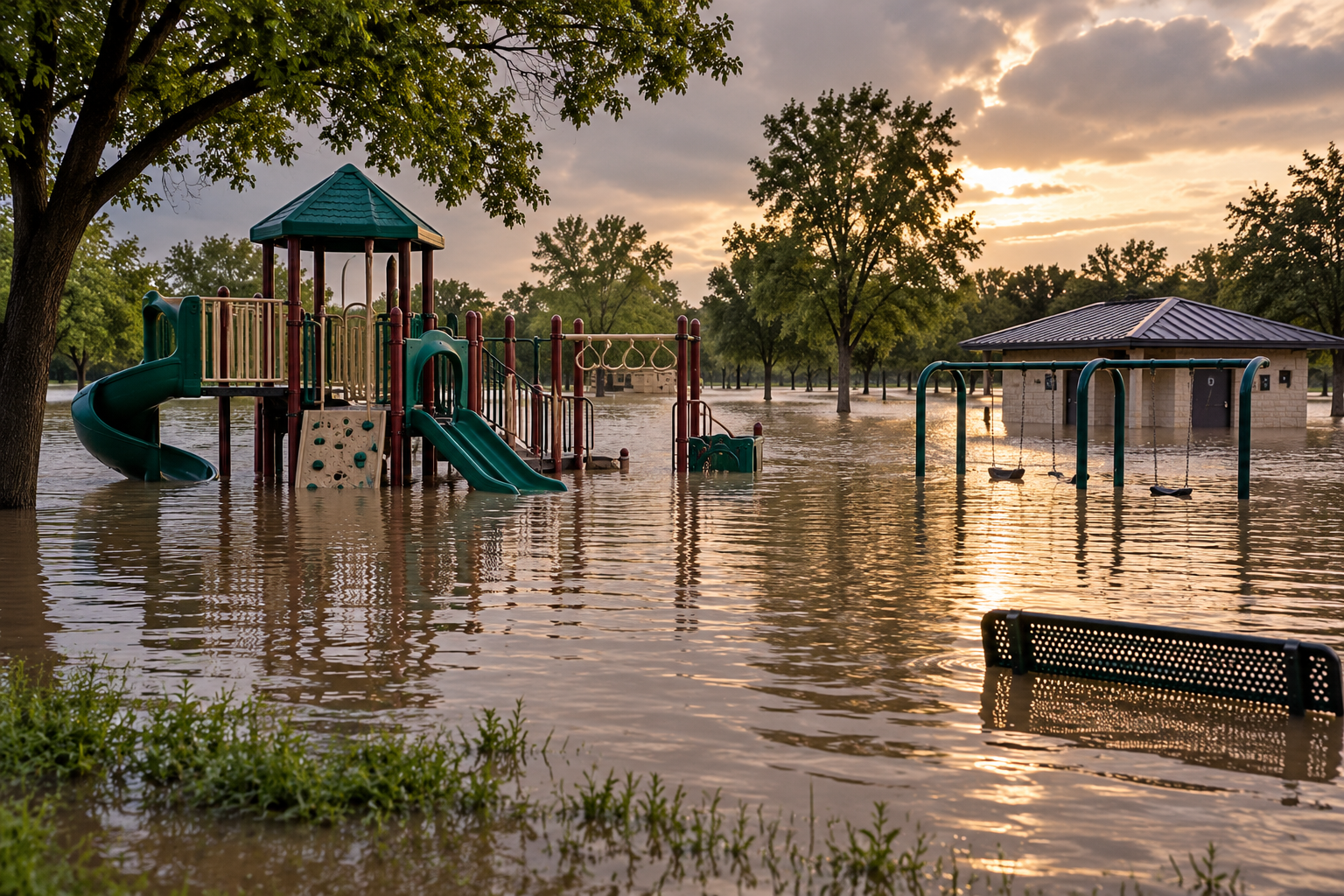
When the Floodplain Line Moves: A Lesson in Designing for Changing Constraints
Some of the best lessons in landscape architecture come from the moments when something you relied on stops being true. For me, one of those moments involved a park, a restroom, and a flood study.
The Setup
We were working for the developer of a master-planned community. The project was a large park and open space at the edge of the development, with entitlements already in place. Early on, the civil engineer and I confirmed that much of the site was in the 100-year floodplain.
That’s often manageable. Passive recreation and sports fields can handle periodic flooding, so we planned the park around them and put the restroom and playground on higher ground. Everything fit.
The Twist
While we were still in design, the municipality finished an updated flood study. It concluded that the development’s added impervious surface had raised the 100-year flood level. At the new elevation, our restroom and playground sat inside the floodplain, and local ordinance didn’t permit permanent structures there.
There was no arguing with it, and no sense treating it as an inconvenience to work around. We redesigned the park and moved the restroom and play equipment to a part of the site above the new flood elevation.
What I Took Away
- A regulatory line is a snapshot, not a promise. Floodplains, wetland boundaries, and setbacks come from studies and rules, and they get updated. When you build a design on one, you’re building on the best information available at that moment.
- Matching uses to risk saved the project. Because the original concept already put flood-tolerant uses in the flood-prone areas, the redesign was a targeted fix, not a rebuild. The fields stayed. The restroom and playground moved. A design built around the site’s constraints is easier to adjust when those constraints change.
- Read the rule behind the line. Knowing the ordinance prohibited permanent structures told us exactly what had to move and what could stay. Understanding the rule, not just the map, kept us from over-correcting.
- Stay close to the engineer and the jurisdiction. Coordination isn’t a one-time checkbox. Ask early whether any studies or map updates are underway, and check in again at milestones. Surprises are cheaper when you see them coming.
- Moving a building is a design problem. Relocating a restroom ripples through access, utilities, sightlines, parking, and how a playground gets supervised. The new location deserves the same care as the first.
- Tell the client early, with a plan. A change like this can touch the schedule, the budget, and permitting, so bring a recommendation along with the news. If the work changes your scope, handle it through your normal additional-services process.
Why It Matters for the L.A.R.E.
This story sits squarely in Inventory, Analysis, and Project Management (IAPM). Knowing which site data you’re relying on, when it was produced, and what regulations attach to it is part of a sound inventory and analysis. Coordinating with consultants and the jurisdiction, and managing a change in scope with your client, is project management. When an exam scenario says new information has come to light, the best answer usually verifies it, reassesses the design, and communicates with the client, rather than ignoring the change or arguing it away.
Tips for Your Own Projects
- Verify the current flood and wetland data at the start of a project, and again at major milestones
- Ask whether any updates are pending
- Avoid putting sensitive elements in marginal zones where a small shift in the line would affect them
- Keep early concepts flexible enough to absorb change
- Document what changed and what you did about it
The Bottom Line
The floodplain didn’t move overnight, but the rule we designed around did, and we had to respond. Sites are living systems, and regulations are living documents. The landscape architects who handle this well are the ones who plan for the possibility that the line will move.
Inventory, regulatory data, and managing a design change when site constraints shift are core LARE Inventory, Analysis, and Project Management (IAPM) topics. Start there for section facts and study guidance.
Want a full study plan? Join the LandCertPrep waitlist to hear first when our LARE study guides by John Denson, PLA, launch, and get our free LARE Study Plan and Readiness Checklist right away.

One Comment