From the Field: “While You’re At It…” How to Handle Scope Creep
When the contract says plaza and the client says parking lot
Early in my career, I was hired to design a plaza for a college campus in Arizona. The client was the campus’s head of landscape architecture, a knowledgeable, well-respected person I wanted to impress. The scope was clear, the contract was signed, and design was moving along nicely.
Then, deep into the design process, came the request. Could we also redesign the planting in a parking lot on the far side of a residence hall? It wasn’t next to the plaza. It wasn’t on our survey. It wasn’t in our fee. But it was asked with total confidence, as if it were a natural extension of the work already underway.
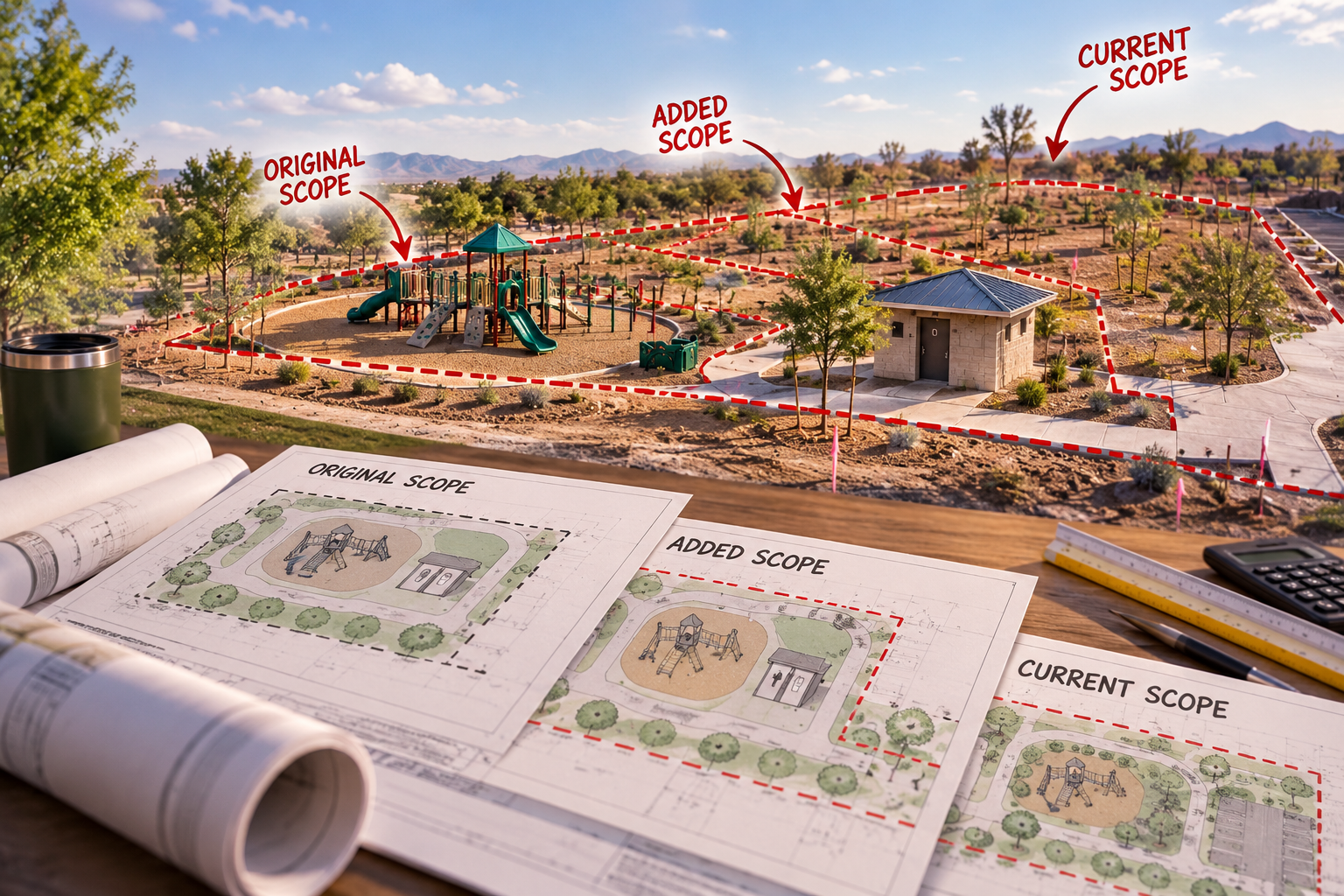
That’s scope creep: work added to a project beyond what the agreement defines, without a matching change to fee, schedule, or resources. It almost never feels like a problem in the moment. It feels like a compliment.
Why It Matters, and Why It’s on the Exam
The L.A.R.E. tests project management, and Inventory, Analysis, and Project Management (IAPM) in particular covers contracts and managing the work you’ve agreed to do. Expect questions that ask you to tell basic services from additional services and to choose the right process for handling a change. The scenario is usually a good client with a reasonable-sounding request, and the question is what you do next.
Left unmanaged, scope creep can:
- Erode your profit on the project
- Pull time away from the work you were actually hired to do
- Shift your schedule and the client’s expectations
- Expose you to liability for work outside your agreed scope and insurance assumptions
- Strain the relationship, ironically, when you finally have to push back late
Why the Parking Lot Was a Different Project
Same client, same campus, but the request wasn’t an extension of the plaza. It was a separate site with its own conditions:
- No survey or base information in our file
- Different utilities, drainage patterns, and irrigation tie-ins
- Different users, circulation, and accessibility needs
- Possibly a different budget source and approval path
At a public institution, that last point matters. Added work may have to go through the institution’s procurement or contract amendment process, and the plaza’s funds may not cover it. Your client may not be able to simply say yes, even if they want to.
How to Handle It in Five Steps
- Recognize it early. Compare every new request against your written scope. If you can’t point to where it’s covered, it probably isn’t.
- Acknowledge, don’t judge. The request is a sign the client trusts you. A tone of “I’m glad you thought of us” keeps the door open.
- Pause before committing. Don’t say yes in the hallway, and don’t start sketching. Tell the client you’d like to look at what it involves and get back to them.
- Define and price it. Outline what’s included, what you’d need (survey, base data), what it costs, and how it affects the schedule. Offer options when you can, such as a conceptual planting plan only or a full design.
- Get it in writing before work begins. Use a contract amendment or additional services authorization signed by the client. Without a signature, you’re working on goodwill.
What I Said
“I’m glad you’re thinking about the parking lot. It’s worth doing well. It’s outside our current agreement, so I’d like to put together a short scope and fee for it as an addition. That way it gets the attention it deserves and doesn’t compete with the plaza. I can have that to you by the end of the week.”
That answer says yes to the client and the idea while protecting the project. In my case, it opened a productive conversation about priorities, timing, and funding. Whether the lot became part of our contract or was handled later, the plaza stayed on track and the relationship stayed strong.
Red Flags That Scope May Be Creeping
- “It’s just a small thing.”
- “We assumed that was included.”
- “Can you just sketch something real quick?”
- Requests that arrive verbally and never in writing
- Work that needs new site information you don’t have
- A growing list of “quick favors” with no change to the fee
Test-Day Takeaway
When a client asks for work beyond the contract:
- Identify that the work is outside the defined scope
- Notify the client and discuss the impact on fee and schedule
- Document the change in a written amendment or additional services agreement
- Proceed only after written authorization
Be wary of answer choices that suggest doing the work for free to keep the client happy, ignoring the request, or starting on a verbal OK.
Practice Question
A client asks the landscape architect to add design services for an unrelated area of the campus, outside the original contract. The client says it’s a small addition and that approval will follow. What should the landscape architect do first?
- A. Begin the work to maintain the schedule
- B. Decline the request to protect the project
- C. Define the added work and obtain written authorization before proceeding
- D. Absorb the cost to preserve the client relationship
Answer: C. Define the change, document it, and get written approval before starting. A and D give away work without authorization, and B turns away a client who trusts you when a simple amendment would serve everyone.
Scope, contracts, and additional services sit in LARE Inventory, Analysis, and Project Management (IAPM). Use that hub for section facts, a study approach, and related reading.
Want a full study plan? Join the LandCertPrep waitlist to hear first when our LARE study guides by John Denson, PLA, launch, and get our free LARE Study Plan and Readiness Checklist right away.


2 Comments